Agenda
Evening Bike Ride and REception | Thursday, October 1 | $25
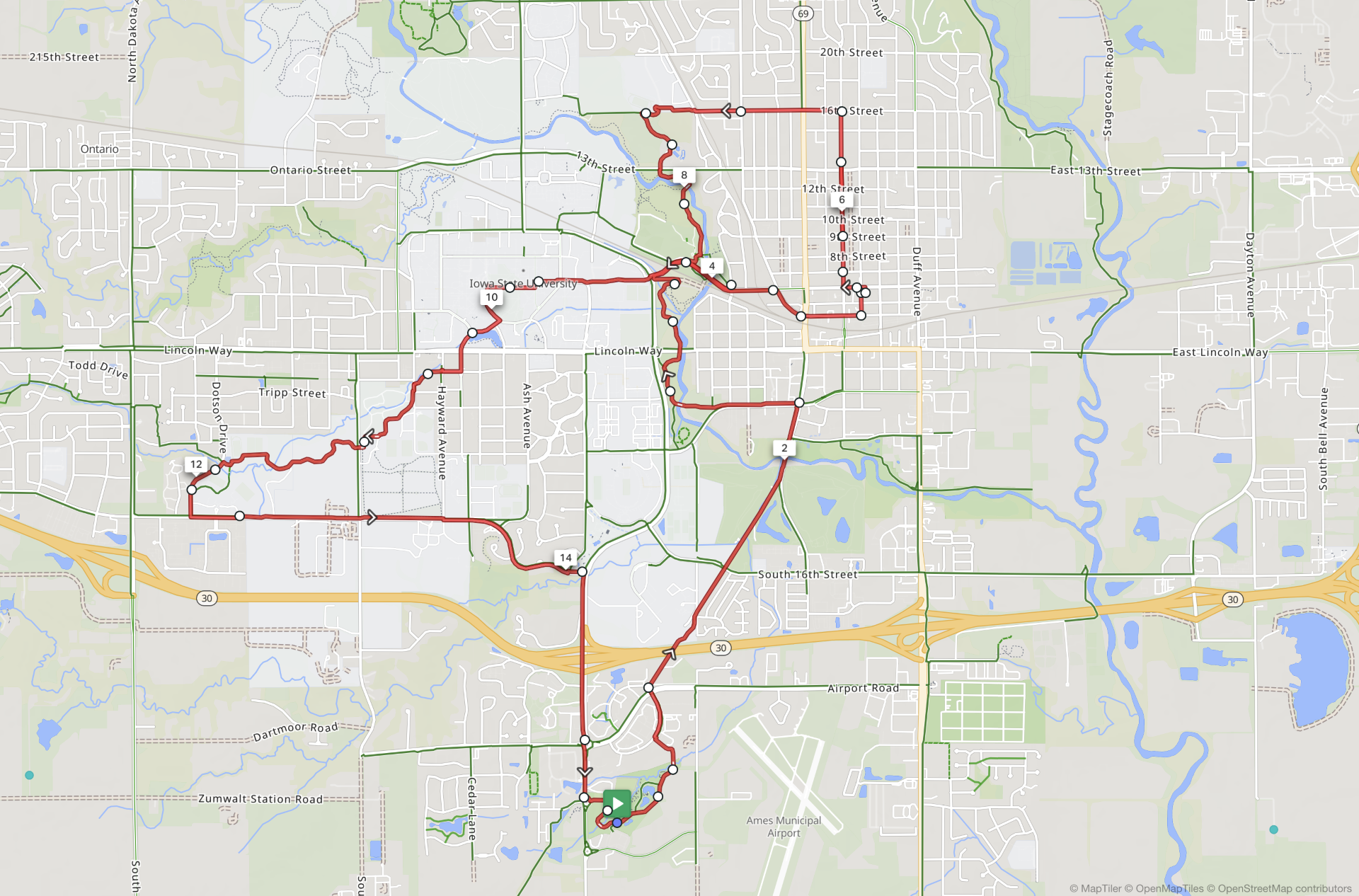
Bike ride route
Kick off the Iowa Trails Summit a day early by joining fellow attendees for an evening ride that showcases one of Ames' premier trail destinations—the beautiful Tedesco Environmental Learning Corridor. Surrounded by restored prairie, wetlands, and scenic pathways, Tedesco provides the perfect setting to connect with colleagues before the conference begins. From there, we'll ride together to Torrent Brewing Company for a relaxed networking reception featuring food, drinks, and great conversation before returning to Tedesco to complete the ride. Whether you're reconnecting with old friends or meeting new trail advocates, this is the perfect way to start your Summit experience on two wheels.
Don't feel like riding? You're still invited to join us at Torrent Brewing Company for the networking reception. Whether you arrive by bike or by car, we'd love to have you there. Please note that a ticket is required to attend the reception, regardless of whether you participate in the ride.
Note: Riders who are staying at the Gateway Hotel may shorten the return trip after the reception by riding directly to the hotel. To help build camaraderie and ensure everyone enjoys the full experience together, all participants are encouraged to begin the ride at Tedesco Environmental Learning Corridor.
Trails and Bike Summit | Friday, October 2 | $85 ($35 student ticket)
*CEU’s available for attendees
Session Descriptions
Beyond the Trail: Engaging Latino Communities in Trail Planning
How can trail planning better reflect the people and communities a trail is intended to serve? This session will highlight a Latino outreach initiative conducted in Marshalltown as part of the Iowa River’s Edge Trail project. Presenters will share the approach used to engage Latino residents, what was learned through the process, and how community perspectives can help inform projects. Attendees will also hear practical lessons for building relationships, reducing barriers to participation, and creating more inclusive community engagement around trails and outdoor recreation.
Plan Today, Preserve Tomorrow: Budgeting for Trail Maintenance
Building a trail is only the beginning. This session will explore how to realistically estimate annual and long-term maintenance costs for paved multi-use trails—and how to prepare for those expenses before they become emergencies. Learn practical approaches for anticipating routine maintenance, major repairs and eventual rehabilitation; developing realistic cost projections; and creating financial and operational plans that support a high-quality trail for decades to come.
Making Room for Trails: Designing Within the Road Right-of-Way
As communities look to close gaps and expand trail networks, road rights-of-way are increasingly important—and sometimes challenging—places to build. This session will explore current trends and best practices for developing multi-use trails within road corridors, including design considerations, separation from traffic, intersections and crossings, drainage, utilities, accessibility, and other common constraints. Learn how thoughtful planning and design can make the most of limited right-of-way while creating safe, comfortable connections for trail users.
What Is That Thing? Navigating E-Bikes, E-Scooters & E-Motos
As e-bikes, e-scooters, e-motos, and other electric devices become more common, communities and trail managers are facing new questions about where they belong and what rules apply. This session will explore emerging safety and management issues associated with these devices, including how they are defined under Iowa law, how communities are addressing them through local ordinances, and the challenges of applying existing rules to rapidly changing technology. Attendees will also learn about public education efforts aimed at helping users understand the rules of the road and trail and encouraging safer interactions among everyone using Iowa’s transportation and trail networks.
Student Poster Session: The Next Generation of Trails & Active Transportation
See fresh ideas and emerging research from Iowa State University students during the Iowa Trails & Bike Summit Student Poster Session. Students will showcase projects and research related to trails, bicycling, active transportation, community planning, design, recreation, and other topics shaping how people connect with places and one another.
Attendees are encouraged to visit with the student presenters, ask questions, and help select the People’s Choice Award winner. The top poster will receive a $500 award, recognizing outstanding student work and supporting the next generation of professionals helping shape Iowa’s communities and transportation networks.
Safe Routes, Stronger Communities: Helping Iowa Kids Walk, Bike & Roll
This session will explore how communities, schools, and families can work together to make walking, biking, and rolling to school safer and more accessible for Iowa students. Learn from successful programs and projects across the state and discover practical strategies for education, encouragement, infrastructure improvements, and community partnerships. Presenter will also share resources available through Iowa Safe Routes to School and ideas communities can use to create safer connections, encourage active transportation, and help more students get to school on foot or by bike.
More Than a Connection: Ankeny’s Experiential Corridor
What happens when a transportation corridor is designed to be more than simply a way to get from one place to another? This session will take a closer look at Ankeny’s experiential corridor and the planning, design, and partnerships behind it. Representatives from the City of Ankeny and ISG will share how the corridor brings together connectivity, placemaking, and thoughtful design to create a more engaging experience for people traveling through the community. Attendees will hear lessons from the project and ideas for thinking differently about how trails and transportation corridors can contribute to a community’s identity and sense of place.